

Assoc. Prof. Mehul Motani (IEEE Fellow, AAIA Fellow)
National University of Singapore (NUS), Singapore
Speech Title: Beyond Black Boxes: Symbolic Equations for Explainable AI
Abstract: How can we make AI models not only accurate, but also understandable? This talk argues for symbolic representations as a rigorous, inspectable foundation for Explainable AI. We examine this paradigm through several lines of work including interpretable decision trees, symbolic knowledge distillation of neural networks, and generalization of symbolic regression with stability. Together, these advances chart a path toward AI models that unite empirical performance with human-verifiable reasoning.
Biography: Mehul Motani received the B.E. degree from Cooper Union, the M.S. degree from Syracuse University, and the Ph.D. degree from Cornell University. He is currently a faculty member in the ECE Department at the National University of Singapore and a Visiting Research Collaborator at Princeton University. Previously, he was a Visiting Fellow at Princeton University, a Research Scientist at the Institute for Infocomm Research in Singapore and a Systems Engineer at Lockheed Martin in Syracuse, NY. Dr. Motani was the recipient of the Intel Foundation Fellowship for his Ph.D. research, the NUS Annual Teaching Excellence Award, the NUS Faculty of Engineering Innovative Teaching Award, and the NUS Faculty of Engineering Teaching Honours List Award. His teaching and research interests include Information & Coding Theory, Artificial Intelligence & Machine Learning, Biomedical & Health Informatics,, Wireless Ad-hoc & Sensor Networks, Internet-of-Things, and 5G. He is a Fellow of the IEEE and AAIA. He has served as the Secretary of the IEEE Information Theory Society Board of Governors, and as an Associate Editor for both the IEEE Transactions on Information Theory and the IEEE Transactions on Communications.

Prof. Andrew Beng Jin Teoh
Yonsei University, South Korea
Speech Title: Biometrics for Connected Systems: From Unimodal Recognition to Flexible Multimodal Identity
Abstract: Biometrics is now a routine way to log in and verify identity across connected services, from mobile apps and IoT devices to cloud platforms and enterprise information systems. In these settings, performance is shaped as much by the system as by the algorithm: people use different devices, cameras and microphones vary widely, networks introduce compression and delays, and real usage includes noise, occlusion, and incomplete data. This keynote presents a progression from unimodal biometrics, which relies on a single trait and is simple to deploy but often brittle, to multimodal biometrics, which improves reliability by combining multiple traits but can raise integration cost, user friction, and operational complexity when some inputs are missing. The talk then introduces the latest shift toward flexible biometrics, a system-oriented approach that treats biometric evidence as variable and opportunistic: the system should authenticate using whatever subset of signals is available at the moment, while keeping results comparable across devices, sensors, and enrollment conditions. Using everyday deployment examples rather than model details, the talk explains why this shift matters for computer communication and information systems, and how it connects to networked identity management, edge and cloud deployment choices, security and spoofing risk, privacy expectations, and long-term maintainability.
Biography: Andrew Beng Jin Teoh received his BEng (Electronic) in 1999 and Ph.D. degree in 2003 from the National University of Malaysia. He is currently a full professor in the Department of Electrical and Electronic Engineering at Yonsei University, South Korea. His research, supported by the National Research Foundation of Korea, Brain Pool, Microsoft Research Asia (MSRA), and the Electronics and Telecommunications Research Institute (ETRI), spans machine learning, AI, biometrics, and biometric security. He has authored approximately 400 peer-reviewed publications in leading international journals, conferences, and book chapters, including TPAMI, TIP, CVPR, ICCV, ECCV, and ACM MM, and has published two books. He has been listed among the world’s top 2% scientists by Elsevier and Stanford University. His editorial service includes Guest Editor of IEEE Signal Processing Magazine, Senior Associate Editor of IEEE Transactions on Information Forensics and Security, Associate Editor of the IEEE Biometrics Compendium and Elsevier’s Machine Learning with Applications, and Editor-in-Chief of the IEEE Biometrics Council Newsletter.
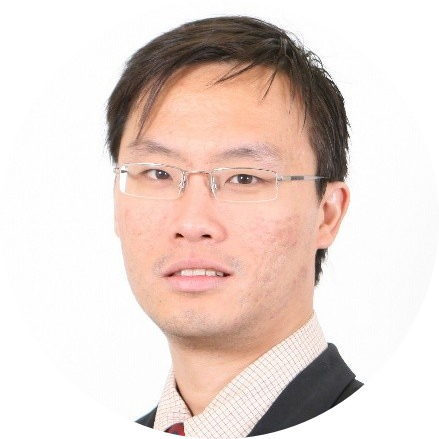
Prof. Chee Seng Chan
Universiti Malaya, Malaysia
Speech Title: Can Visual AI Recognise Everything and Still Miss the Action?
Abstract: A vision model can identify the visible entities in a scene while failing to represent the event. A person may be drinking from a cup, pouring into it, washing it or passing it to someone else. The entities remain largely unchanged, yet the action, geometry, and contact differ. An image can also appear photorealistic while depicting an interaction that is physically or functionally implausible. Evaluations centred on appearance may not expose such failures. This talk examines a research proposition. Interaction should become a central unit of visual intelligence. Human-object interaction offers a structured way to connect actors, actions, objects, spatial layout, contact and affordance across images, videos and 3D environments. Collaborative work on controllable generation, interaction editing, unified modelling and video-guided 3D affordance grounding illustrates what this representation enables. Its failures also reveal the limits of current approaches. The broader challenge concerns interaction reasoning. Progress requires representations that transfer across tasks and modalities, together with evaluations of physical and functional consistency. It also requires evidence that can separate relational reasoning from convincing imitation. The talk, therefore, asks a simple but demanding question. Can visual AI move from recognising what is present to representing what is actually happening?
Biography: Chee Seng Chan is currently a full Professor at Universiti Malaya, Malaysia. His research interests include computer vision, machine learning, and trustworthy artificial intelligence. He leads an active research team whose work has been published in leading international venues such as CVPR and NeurIPS. He is among the key architects of ILMU, Malaysia’s first sovereign large language model, and has contributed to major initiatives, including Ryt AI for Ryt Bank, the world's first AI-powered digital bank. Dr. Chan has received several recognitions, including the Top Research Scientists Malaysia Award and the Hitachi Research Fellowship. He serves as an Associate Editor for Pattern Recognition, IEEE Transactions on Circuits and Systems for Video Technology and has held leadership roles in major international conferences, including the General co-chair for IEEE VCIP 2013, ACPR 2015, IEEE MMSP 2019, and ACM MMAsia 2025 and 2026. From 2020 to 2022, he served at the Ministry of Science, Technology and Innovation, Malaysia, as Undersecretary in the Division of Data Strategic and Foresight.